How is packaging automation reshaping eCommerce?
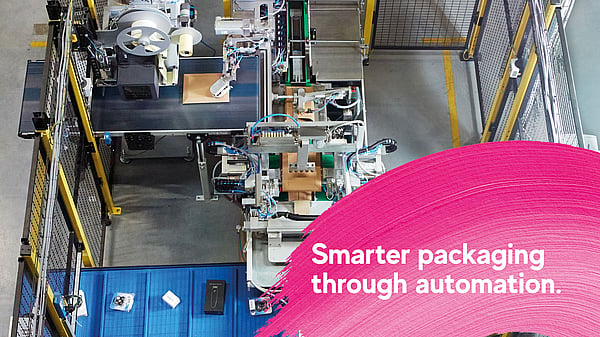
As eCommerce fulfilment continues to evolve, packaging is no longer simply the last step before delivery. It has become an integral part of fulfilment operations, with its design and performance directly influencing warehouse productivity, transport efficiency, and customer experience. This shift has been accelerated by the rapid adoption of automation across fulfilment operations.
Traditionally, automation in eCommerce focused on improving efficiency through technologies such as automated picking systems, robotic handling and conveyor-driven sorting lines capable of processing orders with minimal human intervention. These innovations transformed the way products move through fulfilment centres, enabling retailers to process growing order volumes with greater speed and accuracy.
While people remain at the heart of warehouse operations, automation has fundamentally reshaped how goods move through the fulfilment process1.
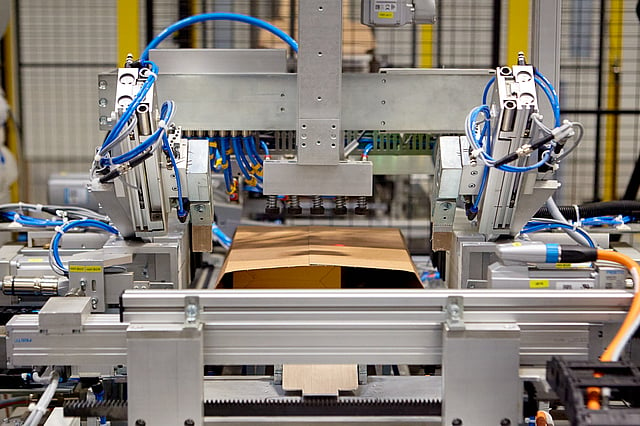
As these systems have become more sophisticated, one function has emerged as a determining factor for their overall performance: packaging. No longer an operational afterthought, it must now work seamlessly with automated equipment — enabling speed, consistency and reliability, while also meeting rising customer and sustainability expectations. Packaging didn't get here as quickly as other parts of the fulfilment chain. Last-mile logistics, for instance, went through its own technical evolution years ago, with route optimisation software, parcel tracking, and carrier network automation all maturing rapidly to meet growing delivery demands2
Packaging, by contrast, was treated as a cost factor rather than a process to be optimised: a box was chosen, a product placed inside, filler added, and the parcel moved on. That approach worked well enough when order volumes were manageable, and expectations towards the unboxing experience were lower.
eCommerce has since changed in scale and complexity, and packaging automation is now emerging as one of the defining operational megatrends of the decade. Retailers who integrate it early into their fulfilment strategy are best positioned to lead; those who treat it as secondary thought are at risk to fall behind potentially.
When is packaging becoming a fulfilment bottleneck?
While automation has transformed picking, sorting and logistics operations, packaging has often remained a largely manual process. However, rising order volumes, labour shortages, increasing product complexity and evolving regulatory requirements are changing this perspective.
As fulfilment operations scale, packaging can directly affect throughput, efficiency and operational consistency. For many retailers, it is becoming a key focus area for future automation investments.
Upstream investments in picking and sorting often reveal their limits when packaging becomes the choke point — one of the most complex and consequential functions in modern fulfilment3".
- Bryan Boatner, Chief Revenue Officer at Ranpak
What is fit-for-purpose packaging and why does it matter?
One of the most visible applications of packaging automation is right-sizing designed solutions. Intelligent right-sizing systems create packaging tailored to the dimensions of individual orders, helping retailers reduce empty space, optimise material usage and improve operational efficiency. This can lead to reduced shipping costs, improved transport utilisation and lower material consumption.
Consumer expectations increasingly support this approach. According to the Mondi Group eCommerce Trend Report 20264:
-
41% of shoppers have already noticed more right-sized packaging from retailers
-
72% say they would avoid retailers that use oversized packaging
These findings highlight how packaging optimisation can support both operational performance and customer satisfaction.
Can retailers automate packaging without rebuilding their operations?
A common misconception is that packaging automation requires large-scale investments or entirely new fulfillment facilities. However, many of today's solutions are designed to integrate into existing operations with minimal disruption. Modular, compact, and scalable automation technologies allow retailers to introduce automation gradually, improving efficiency while maintaining operational flexibility.
One example is Mondi’s eComPack machine, a semi-automated packaging machine designed to bridge the gap between fully manual packing process and fully automated packaging operations. By integrating into existing fulfilment environments, eComPack enables retailers to:
- achieve greater packaging consistency
- reduce material waste
- increase throughput
without requiring an operational overhaul. Solutions like eComPack reflect a broader industry trend towards packaging automation that support today’s operational requirements while creating a pathway for future growth.
True packaging innovation lies in how intelligently the packaging is created and integrated into fulfillment operations. Automation enables companies to improve efficiency and environmental performance at the same time."5
- Francesco Ponti, Chief Executive Officer of CMC Packaging Automation
Does packaging automation support sustainability goals?
Packaging automation is increasingly helping retailers improve both operational performance and sustainability outcomes. Right-sized packaging can:
- reduce material usage
- eliminate plastic void filler
- improve transport efficiency by enabling more parcels to fit within each delivery vehicle.
These efficiencies can help reduce waste, optimise resources and lower transport-related emissions. In addition, evolving regulations are increasing the importance of packaging optimisation. The Packaging and Packaging Waste Regulation (PPWR) is expected to drive further focus on recyclability, material efficiency and reducing unnecessary packaging.
For retailers, packaging automation is becoming a core tool for balancing efficiency, customer expectations and environmental objectives.
Automation is now the most practical way to meet sustainability targets".6
- Francesco Cecci, Cluster Sales Manager eCommerce at Coesia
- Mondi Group eCommerce Trend Report 2026, pp. 37-38
- Mondi Group eCommerce Trend Report 2026, p. 39
- Mondi Mondi Group eCommerce Trend Report 2026, p. 40
- Mondi Group eCommerce Trend Report 2026, p. 39
- Mondi Mondi Group eCommerce Trend Report 2026, p. 40
- Mondi Group eCommerce Trend Report 2026, p. 39

Transforming market insights into better solutions
Stay ahead of packaging trends in 2026 with our latest eCommerce trend report.
Built on deep, continuous market research, we explore how digital convenience and physical experience are becoming increasingly connected, and how packaging innovation plays a vital role in bringing the two together.
Looking for eCommerce packaging?
Integrated solutions across industries and applications
-

Corrugated boxes for eCommerce
Strong, sustainable corrugated boxes designed for eCommerce. Fast-packing, robust and easy to open, they also provide a great unboxing experience.
-
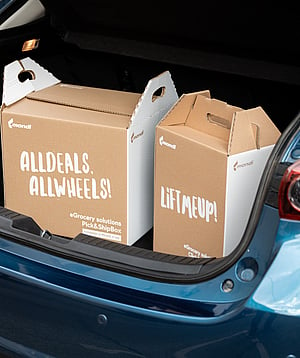
eCommerce packaging for online grocery shopping
Mondi’s eGrocery offers clever designs with different bottom and closure options as well as inserts and easy opening and carrying solutions.
-
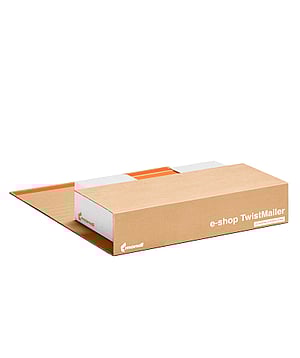
Corrugated mailers
Flexible eCommerce packaging designed to ship less air, cut logistics costs and make packing and returns simple.
-
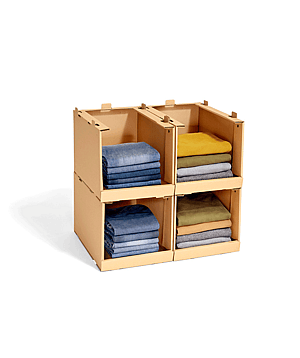
Corrugated shelves
From fashion to logistics, our recyclable corrugated shelves provide lightweight strength, modular flexibility and a corrugated alternative to traditional racking.
-

Fanfold packaging
Sometimes large, bulky goods need something special. That’s when our fanfold packaging is the right solution.
-
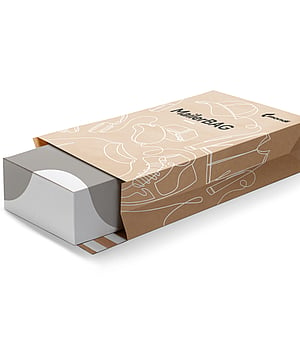
Paper mailers
Our paper mailers are cost-effective, sustainable packaging solutions suitable for a wide range of products – from bulky goods to fragile items.
-
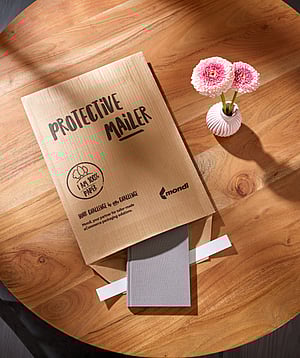
Protective Mailer
Protect your products with a fully recyclable in European paper streams padded mailer that’s strong and easy to use and kinder to the planet.
-
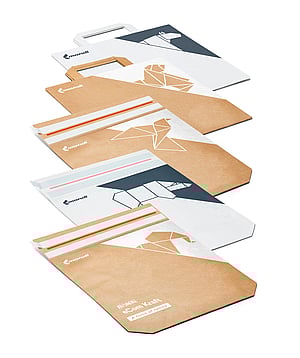
Kraft paper for eCommerce
Our Ad/Vantage and Eco/Vantage eCommerce portfolio includes high quality brown, white and recycled paper grades. Ideal for non-food and food applications with direct food contact certifications. Our Eco/Vantage production can also offer closed loop possibilities for retailers.
-
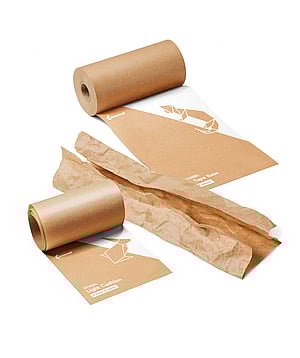
Cushioning & impact-absorbing kraft paper solutions
We offer water-activated tapes, gummed tapes and cushioning paper, with product features designed to suit your specific needs.
-
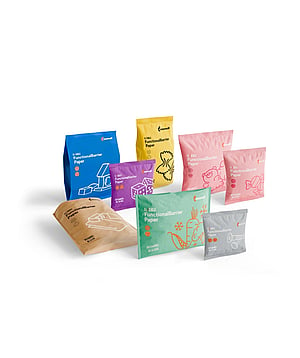
Functional barrier papers
Our re/cycle FunctionalBarrier Paper range is the answer to your sustainable packaging demands. By applying various barrier technologies to paper, we offer fibre‑based alternatives to plastic for HFFS and VFFS applications. From frozen food to eCommerce and everything in between - you name it, we pack it!