Responsible Business Practices
Our responsible business practices focus on environmental performance, human rights, communities and responsible procurement.
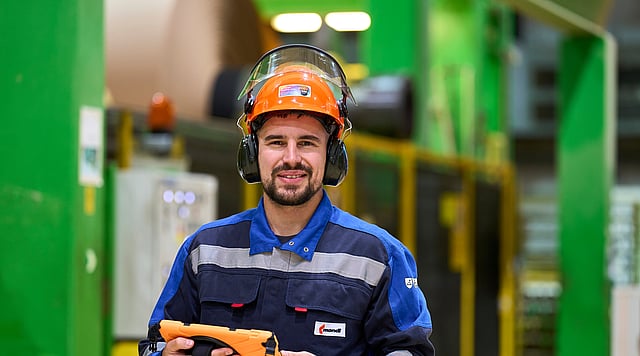
Responsible business practices underpin our MAP2030 performance
Our sustainability framework, Mondi Action Plan 2030 (MAP2030), is supported by responsible business practices spanning environmental performance, human rights, communities, and responsible procurement.
Our responsible business practices at a glance
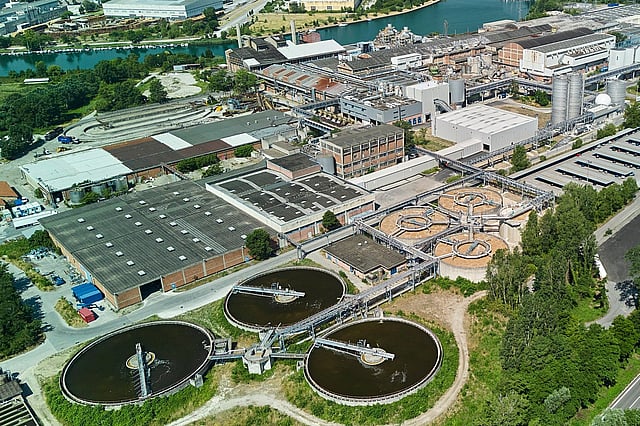
Resource efficiency is fundamental to many of our material issues. We work with partners across our value chain to use resources wisely, prevent environmental degradation and support a circular economy.
We are committed to reducing water use and increasing water recycling, as well as finding alternative solutions for waste by recycling or reuse.
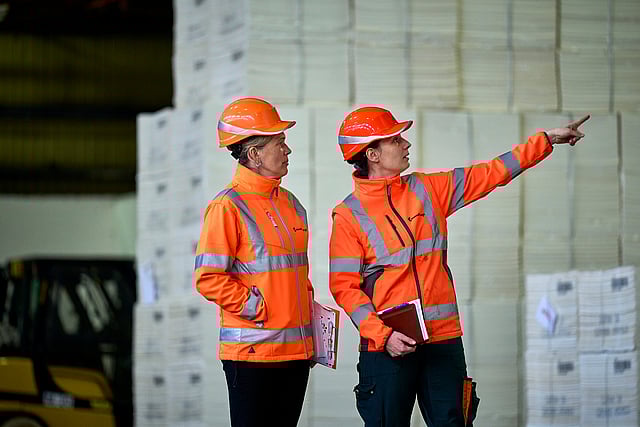
Upholding and respecting human rights in our operations and across our supply chain is key.
We are working to enhance our internal processes and tools to identify and manage potential risks as we introduce our Human Rights Due Diligence approach across the business.
Our business thrives when it is connected to healthy and prosperous communities. We support sustainable development and engage with communities around our operations to build trust and collaboration.
We use a variety of stakeholder engagement tools to better understand the needs of local communities around our operations and our impact on them.
We focus our social investments on areas where we can make the greatest difference, guided by the principles of sustainable development, national and local development priorities and our business objectives.

Stakeholders are seeking more and more information on how businesses manage their supply chain risks. We work to intensify our engagement with suppliers and use our responsible procurement process for evaluating and monitoring their sustainability risks and performances.
We work to maintain high standards to ensure a responsible procurement of wood and pulp through our Due Diligence Management System (DDMS).
.jpg?stamp=b85241895475e3866b78ed90461ca40f2408ad1b)
specific COD emissions reduction compared with our 2020 baseline
social investments in our communities
supplier sites screened for sustainability risks in 2025
2025 performance indicators for Responsible Business Practices
Our responsible business practices commitments, their targets and performance
Environmental performance: We will continually work on improving the environmental performance of our operations to minimise environmental impacts
Targets
Reduce specific contact water consumption by 10% by 2030 from a 2020 baseline
Reduce specific effluent load (measure COD) by 15% by 2030 from a 2020 baseline
Reduce specific NOx emissions from our pulp and paper mills by 10% by 2030 from a 2020 baseline
Reduce specific waste to landfill by 30% by 2030 from a 2020 baseline
100% of our operations will be certified according to globally accepted environmental standards equivalent to ISO 14001 by 2025
2025 performance
Specific contact water consumption increased by 3% compared with our 2020 baseline and by 8% compared with last year, due to the integration of our acquired sites. We are evaluating efficiency measures to reduce water usage and improve specific contact water performance.
Specific COD emissions decreased by 19% compared with our 2020 baseline, and decreased by 8% since last year, due to efficiency improvements in wastewater treatment plants in Richards Bay and Merebank (South Africa) and Świecie (Poland).
Specific NOx emissions decreased by 13% compared with our 2020 baseline, and were 1% higher than last year, due to the integration of our acquisitions.
Specific waste to landfill decreased by 63% compared with our 2020 baseline and 31% since last year, mainly due to improvements in Richards Bay (South Africa) and in Ružomberok (Slovakia).
Certification across the Group increased from 81% in 2024 to 100% in 2025 with all of our pulp and paper mills and converting operations ISO 14001 certified.
Human rights: Strengthen governance systems to prevent human rights violations and remedy any adverse impacts.
Targets
Develop the due diligence and risk assessment methodology and guidance with the support of the Danish Institute for Human Rights (DIHR) by end of 2021
100% of operations with a completed human rights due diligence and risk assessment, and action plan in place to address findings by 2025
100% of operations to have addressed their human rights impacts (investigate, prevent future occurrences and remedy adverse impacts) by 2030
2025 performance
We completed this target in 2021 and have continued to review our methodology based on upcoming legislative requirements and the experience gathered in applying the approach. In 2025, we reviewed our internal guidance documents.
We have completed a review of the relevant due diligence steps for all Mondi’s operations. All operations with higher-risk areas have adequate measures defined as part of our continuous sustainability management programmes. Ongoing initiatives related to our focus topics and due diligence roadmap are on track.
In 2025, no significant changes in Mondi’s risk areas were identified and no adverse human rights impacts or incidents were reported in our operations.
Communities: Maintain social investments in our communities to support sustainable development aligned with local needs.
Targets
Report on our total social investment annually
2025 performance
Mondi Group and Mondi operations around the world have spent over €6.6 million on social investments. We continued to support multiple community engagement projects across our key focus areas and operations, including Mondi Ružomberok (Slovakia) supporting the ‘Regiochem’ competition for skilled primary school students that encourages creativity and scientific engagement, Mondi Świecie (Poland) supporting the ‘Equality in the world’ debate for students and experts, Mondi Frantschach (Austria) contributed to the renovation of the local fire station in the municipality of Frantschach-St. Gertraud and Mondi Štětí (Czech Republic) is supporting a project to breed peregrine falcons on industrial structures.
Responsible procurement: We mitigate risks and create greater transparency in our supply chains through our responsible procurement process
Targets
We will minimise the supplier risk ratio year-on-year
2025 performance
In 2025, we screened 2,128 supplier sites and put significant effort into engaging with our suppliers on corrective actions. The supplier risk ratio remained stable at 1% with 24 supplier sites classified as high risk at year end.
Remaining high-risk cases are reviewed by our Responsible Procurement steering committee and appropriate actions are defined.
In the last three years, we have assessed over 5,000 supplier sites, demonstrating our commitment to enhanced transparency in our supply chain.
Responsible procurement: Ensure that all our wood fibre (round wood, wood chips and market pulp) is sourced solely from credible wood sources
Targets
Maintain 100% of wood fibre compliant with credible standards (FSC™, PEFC, or FSC Controlled Wood)
For high-risk countries maintain 100% FSC™-certified fibre sourcing or implement additional risk mitigation measures
100% PEFC- or FSC certified market pulp
100% PEFC- or FSC Chain-of-Custody certification for our pulp and paper mills
We will continue to work with certification bodies to ensure credibility of the certification and Controlled Wood systems
2025 performance
100% of our fibre was responsibly sourced, including 82% FSC or PEFC certified, with the remainder meeting the FSC Controlled Wood standard.
We achieved our target as no wood was imported from high-risk countries in 2025.
100% of market pulp was procured as FSC or PEFC certified.
All operating Mondi pulp and paper mills were FSC or PEFC Chain-of-Custody certified in 2025.
In 2025, we participated in PEFC’s and FSC’s General Assemblies and also arranged two in-house certification seminars with the support of the international secretariats of PEFC and FSC.
Latest articles on our business practices
-
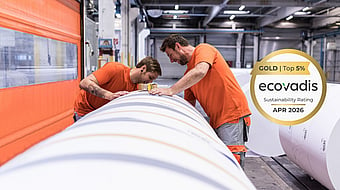
EcoVadis awards Mondi Gold sustainability rating, ranking it among the top companies worldwide
Press release7 May 20261 min -
Mondi’s leading sustainability practice recognised again with CDP A List rating
Press release12 Dec 20252 min -
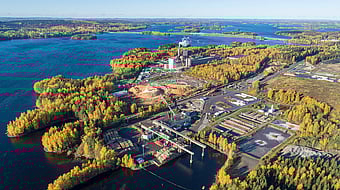
Mondi retains its Net Zero commitment
Press release15 Oct 20252 min -
.jpg?stamp=23d59ce60e4b0d78485afefc224ce0f6c3e75442)
Putting packaging at the heart of Europe’s circular economy
Insights1 Oct 20253 min -
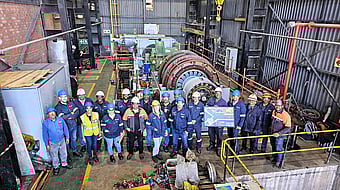
Mondi South Africa drives energy self‑sufficiency and climate resilience with new turbine and flood‑proofing projects
Press release15 Sep 20252 min -

Mondi to increase energy self-sufficiency to 90% at its pulp and paper mill in Slovakia with new biomass power plant
Press release18 Aug 20252 min -
EcoVadis ranks Mondi among top 1% of companies worldwide for ninth year in a row
Press release15 May 20251 min -
CDP recognises Mondi’s leading practices with a prestigious 'A' score for both climate change and forests
Press release7 Feb 20253 min -
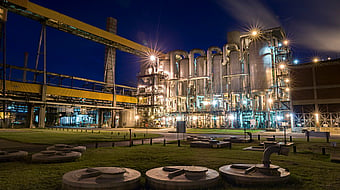
Mondi South Africa excels in energy resilience and efficiency, contributing to our Net-Zero pathway
Case study10 Jan 20254 min -
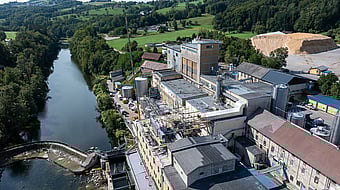
Mondi Neusiedler completes €20 million investment to improve energy efficiency and sustainability
Press release17 Dec 20242 min