Creating a safety culture at Mondi: Exploring pathways toward a safer workplace
.jpg?stamp=cda8caded059c9ae52ee6d223328208a2ebd79df)
- At Mondi, we understand that building a strong safety culture requires more than just rules. Our approach, grounded in the Social Psychology of Risk, focuses on influencing how people think, interact, and make decisions about risk. This human-centred philosophy recognises that people don't just follow rules: they respond to stories, relationships, and social norms.
From incidents to shared learning
At our Kalenobel plant in Türkiye, what began as a response to workplace incidents has evolved into one of our most inspiring learning movements. Instead of filing incidents away in reports or limiting lessons to training rooms, the team creates short, powerful videos for every incident or near-miss, showing two versions: the incorrect approach that led to risk, and another demonstrating the correct method that prevents harm. These visual lessons turn real moments into shared learning, reinforcing that safety is a collective responsibility.
Aligned with our recently refreshed ‘Nine Safety Rules to Live By’, each video is filmed on the shop floor using real equipment and scenarios that employees encounter every day. Designed with accessibility in mind, the videos require no spoken words, captions, or audio. Simple motions, clear visuals, and direct contrasts make them universally understandable. In just a few seconds, team members see what safe behaviour looks like and why it matters.
This approach transforms learning into empowerment, strengthens social bonds, and creates a cycle where experiences fuel improvement, not fear. People learn not because they are told to, but because they feel part of something bigger: a culture where everyone protects one another.
Explore how Mondi is taking action
Building a culture of trust and inclusion
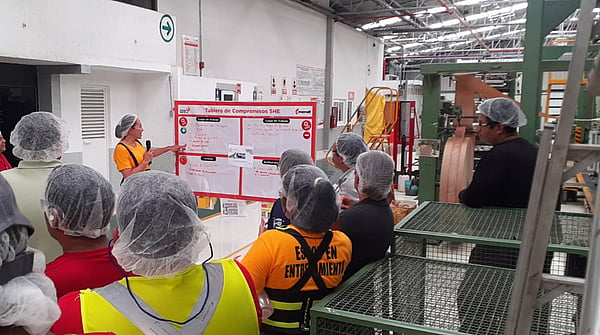
Cultural initiatives are not just programmes but part of daily work. At our Monterrey plant in Mexico, safety and health have become both personal and meaningful. Campaigns such as ‘Your Reasons to Be Safe and Healthy’ feature employees and their families on posters throughout the facility, creating an emotional and relatable link to safe behaviours. The ‘Nine Safety Rules to Live By’ are reinforced through weekly bulletins, internal videos featuring both management and operators, and Engagement Board sessions that encourage discussion and reflection. This consistent visibility keeps safety messages fresh, practical, and relevant.
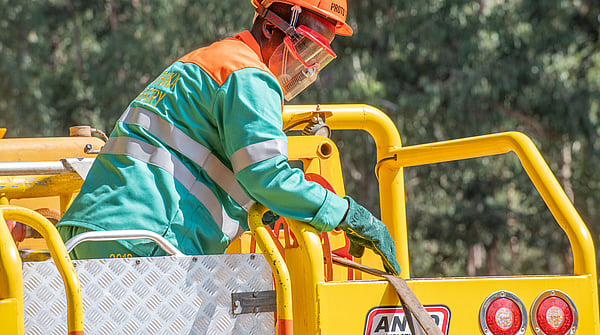
Onboarding and competence management are supported by a transparent Skill Matrix displayed on the shop floor, allowing everyone to see the qualifications and development paths of their peers. New employees wear green shirts labelled ‘I am in training’ for their first three months, a simple but effective way to signal the need for guidance and support. Regular team shirts, proudly marked with ‘Watch my back’, reinforce a shared mindset of mutual care and responsibility. These practices promote trust, vigilance, and teamwork across shifts and departments.
Innovation in cultural engagement is also evident in programmes like SHE Formula 1, where teams earn points for safety, health, and environmental initiatives, promoting collaboration and continuous improvement. Combined with open reporting systems, visible leadership walks, and ‘Safe to Speak Up’ messaging, these efforts build a psychologically safe environment where employees feel empowered to raise concerns and contribute ideas without fear of blame.
Leadership and continuous improvement
Leadership remains the cornerstone of this success. By respecting local traditions, ensuring inclusive facilities, and engaging directly with employees, leaders help strengthen trust, participation, and shared accountability. Both sites exemplify how we integrate the Workspace, Headspace, and Groupspace elements to create a balanced environment where safety is more than compliance; it's a lived experience grounded in care, dialogue, and collective responsibility.
At Mondi, safety isn't just something we practise. It's something we live every day, together.