Snack to the future: Packaging built for protection, shelf impact and brand trust
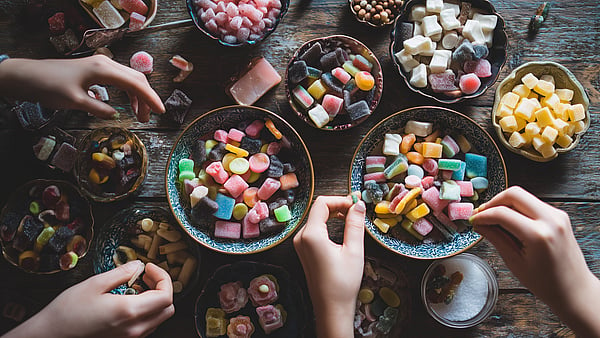
Snacks and confectionery are high‑volume, impulse categories, produced on high‑speed packing lines and expected to perform across complex supply chains.
In snacks and confectionery, corrugated and solid board packaging:
- protects products at speed, reducing crushing and visible damage
- helps products stand out in crowded aisles
- signals brand values in seconds
Avoidable loss often happens before the shopper sees the product: when packs are damaged in transit or during replenishment and no longer look sellable. Preventing damage in transit is key:
- The Food and Agriculture Organization of the United Nations1(FAO) estimates that around one‑third of food produced globally is lost or wasted.
- UNEP’s Food Waste Index2(United Nations Environment Programme) highlights the scale of waste at retail and consumer level.
According to a 2025 report by McKinsey & Company3, consumers expect packaging to be developed with sustainability in mind, while still demanding value, quality and convenience.
For producers and retailers, the tension is familiar: how do you meet the rising sustainability expectations of consumers and stricter regulations without sacrificing efficiency, shelf impact or cost competitiveness?
What you’ll learn in this article
- How consumer expectations on sustainability, price and quality are shaping packaging choices
- Where smart packaging can reduce waste, cost and complexity
- Why collaboration across the value chain is key to future‑proof solutions
Snacks and confectionery packaging under pressure: performance, price and sustainability
Even though secondary packaging isn’t always consumer-facing, consumer expectations shape retailer standards for shelf availability, presentation and sustainability.
In practice, that shows up in retailer requirements such as:
- high availability (fewer out‑of‑stocks) supported by fast, low‑damage replenishment
- credible recyclability and easy back‑of‑store handling and disposal
So the question isn’t simply whether to change packaging, it’s how to evaluate changes without adding cost, complexity or risk.
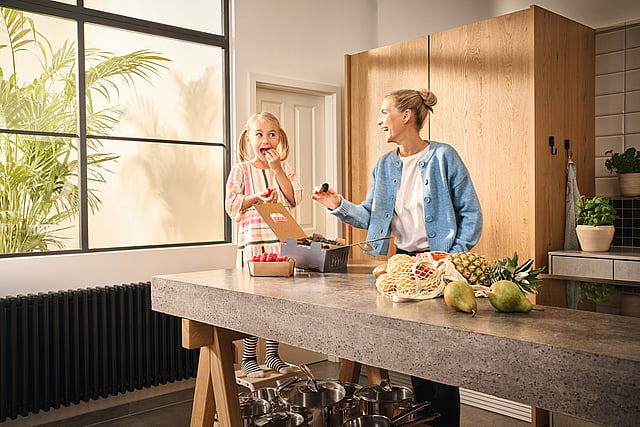
The real pain points: speed, shelf execution and circularity
High volumes and tight margins mean packaging needs to run efficiently at scale. Retail adds another layer: shelf‑ready formats must be easy for store staff to handle while remaining attractive to shoppers. Brands are balancing several pressures at once:
-
operational efficiency at scale
-
shelf execution
formats that move from distribution to shelf with minimal handling -
visibility
packaging that stays shelf‑attractive (no crushing/visible damage) and easy to spot -
real‑world circularity
which depends on local collection, sorting and recycling systems, and on pack design and disposal behaviour
Many brands address these pressures with shelf‑ready, paper‑based formats designed to move smoothly from distribution to shelf, while staying simple for retailers to open, stock and recycle. Industry guidance from FEFCO4 (European Federation of Corrugated Board Manufacturers) frames shelf‑ready packaging around the “Five Easies”:
- Easy to identify: clear flavour/variant recognition for fast shelf fills
- Easy to open: tear‑open access without ripping or crushing packs
- Easy to stock: quick replenishment of trays/displays, fewer impulse out‑of‑stocks
- Easy to shop: clean, front‑facing presentation (no crushed bags or broken biscuits)
- Easy to recycle: simple back‑of‑store flattening and disposal in the paper stream
In impulse categories, packaging must earn attention in seconds: poor execution becomes commercial risk. Seasonal launches and promotions drive frequent artwork/SKU (stockkeeping unit) changes; digital printing supports faster changeovers and limited editions without extra label steps.
Real-world packaging solutions: fit-for-purpose trade-offs
Shelf‑ready packaging (SRP) is a practical route to ‘fit‑for‑purpose’ sustainability: it protects products in transit, speeds up store handling and keeps presentation consistent at shelf.
Done well, SRP can simplify the system end‑to‑end:
- Make it easy for store teams: make packs simple to identify, open, replenish and recycle. For example, the Smart Lock display removes plastic tape for a fully fibre-based solution.
- Protect the product: use robust corrugated structures for distribution and handling. Reinforced tray corners and sturdy constructions help packs withstand stacking on pallets and transport – critical for avoiding visible damage that can put shoppers off.
- Support shelf impact: use high‑quality print and eye‑catching displays for seasonal variants and promotions. Digital printing can speed up artwork changes and short runs, while bold die‑cuts and vibrant print help catch shoppers’ attention.
Any packaging change must also work on high‑speed lines: in snacks and confectionery, small slowdowns, jams (on the line – not on your croissant) or extra handling can quickly become costly downtime.
Where collaboration delivers better packaging outcomes
The best packaging solutions are rarely developed in isolation. They come from brand owners, retailers and packaging experts working through the trade‑offs early, agreeing what matters most and designing to those priorities from the start.
Packaging partners such as Mondi can add value by bringing a structured approach to shelf-ready formats. Platforms such as ThinkBox help teams stress-test ideas early – before any costly redesigns.
In fast-moving categories like snacks and confectionery, this kind of co-creation helps teams:
- shorten development times and reduce rework by agreeing priorities early
- test designs under supply chain conditions to protect line speed, product integrity and shelf presentation
- optimise pack sizes, layouts and palletisation for transport efficiency
- adapt shelf-ready formats to local retail requirements across different markets
The result is packaging that performs from production to shelf: easy to pack, stock and recycle – with fewer surprises and redesigns later.
Sustainable by design, not by compromise
Sustainability delivers the most value when it is embedded from the outset. In the EU, the Packaging and Packaging Waste Regulation (PPWR) reinforces packaging designed for recyclability within existing collection and recycling systems. In practice, this means packaging that is:
- designed for recycling
- sourced from responsibly managed renewable resources
- compatible with relevant collection and recycling systems
Industry bodies such as Pro Carton5 note that in snacks and sweets, design choices (materials, barriers and print finishes) influence whether fibre‑based packs like corrugated and solid board solutions can be effectively collected and recycled at scale.
In snacks and confectionery, corrugated and solid board packaging supports circularity most strongly in markets with well‑established paper recycling infrastructures. FEFCO6 highlights corrugated packaging’s high fibre recovery and recycling rates in Europe.
Research by McKinsey & Company7 indicates that recyclability is a leading sustainability criterion for consumers across many markets. It can carry more weight in decision‑making than material attributes such as bio‑based or compostable.
With considered design, packaging can be engineered to be recyclable where appropriate pathways exist, while still offering shelf appeal, structural strength and efficient handling. Combining transport and display functions in a single fibre‑based format may also reduce total material use and associated emissions.
The next step is applying these principles in day-to-day design decisions – testing trade-offs early and adapting by market.
The future of snack and confectionery packaging: smart, steady progress
Sustainable packaging for snacks and confectionery is about smart, steady progress rather than radical disruption.
By focusing on what consumers truly value, using materials responsibly and working collaboratively across the value chain, brands can meet today’s expectations while staying responsive to what comes next. In a category defined by speed, choice and convenience, the right packaging partner does more than supply material; they help solve problems.
Your challenge is our challenge.
1. FAO (2011), Global food losses and food waste – Extent, causes and prevention
2. United Nations Environment Programme (UNEP) (2021), Food Waste Index Report 2021
3. McKinsey & Company, Sustainability in Packaging 2025
4. FEFCO (European Federation of Corrugated Board Manufacturers), Shelf Ready Packaging
5. Pro Carton (European Association of Carton and Cartonboard Manufacturers), Sustainable Packaging Trends in Snacks and Sweets
6. FEFCO (European Federation of Corrugated Board Manufacturers), Circular by nature
7. McKinsey & Company, Sustainability in Packaging 2025
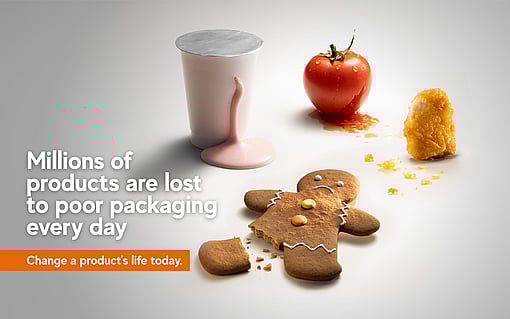
You create excellence. We package it.
Discover our shelf-ready and retail-ready packaging solutions that delight customers while enabling you to restock quickly and safely.
You might also be interested in...
-
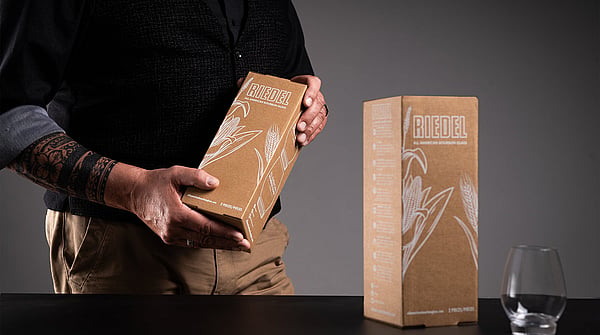
Packaging as a brand experience: how white digital printing on brown paper supports premium presentation for Riedel Glas
Case study5 May, 20262 min -
.png?stamp=453fa904b2524b568a18b6a29e4819d39939ffd9)
Mondi showcases semi-chemical fluting portfolio for demanding food and heavy-duty supply chains
Press release9 April, 20262 min -
.png?stamp=1e2a342c132e6970205bf9025b4666dc0f6e1b8d)
Mondi reveals how purpose-built corrugated packaging can drastically reduce food waste
Insights26 March, 20262 min